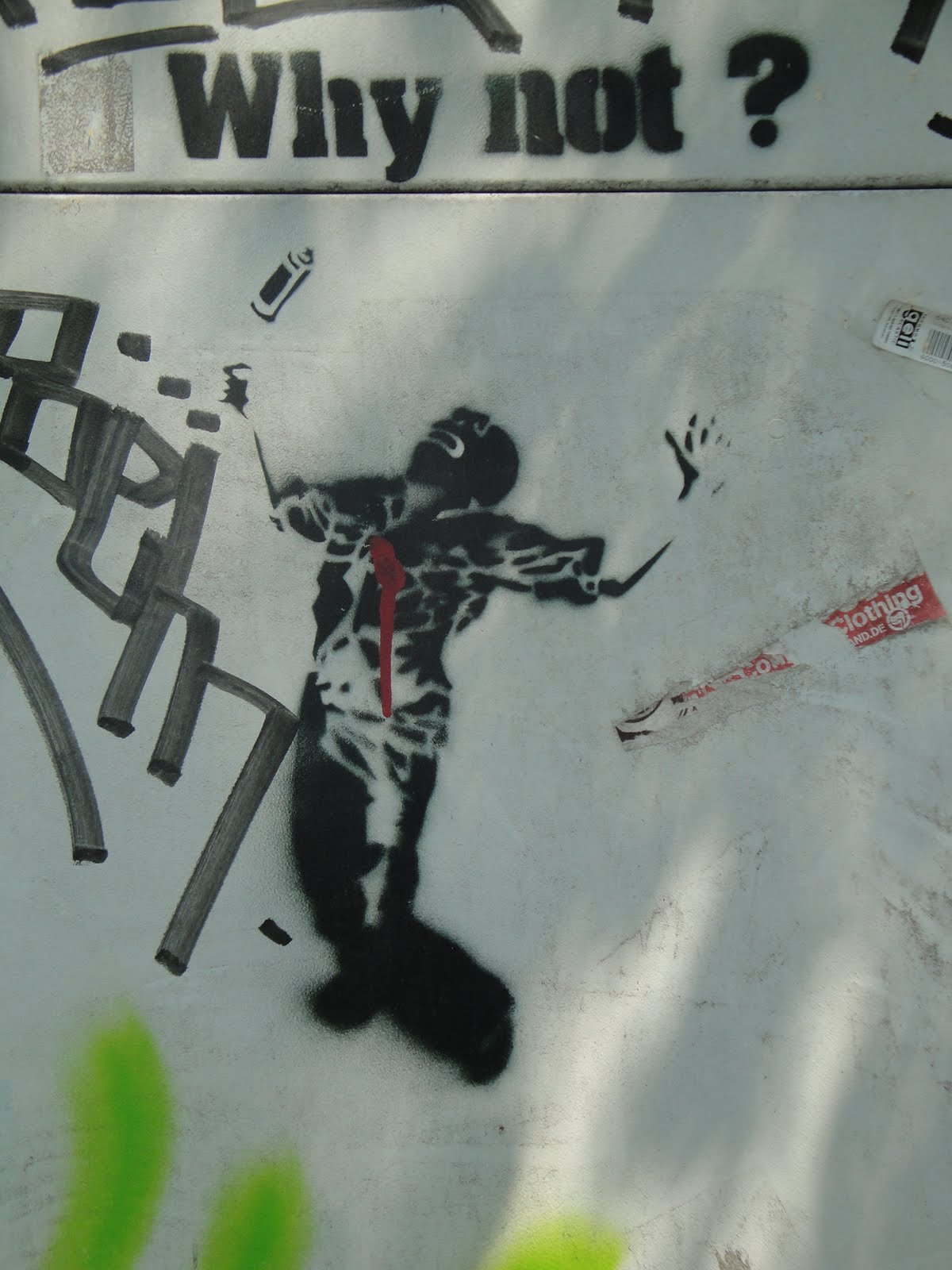
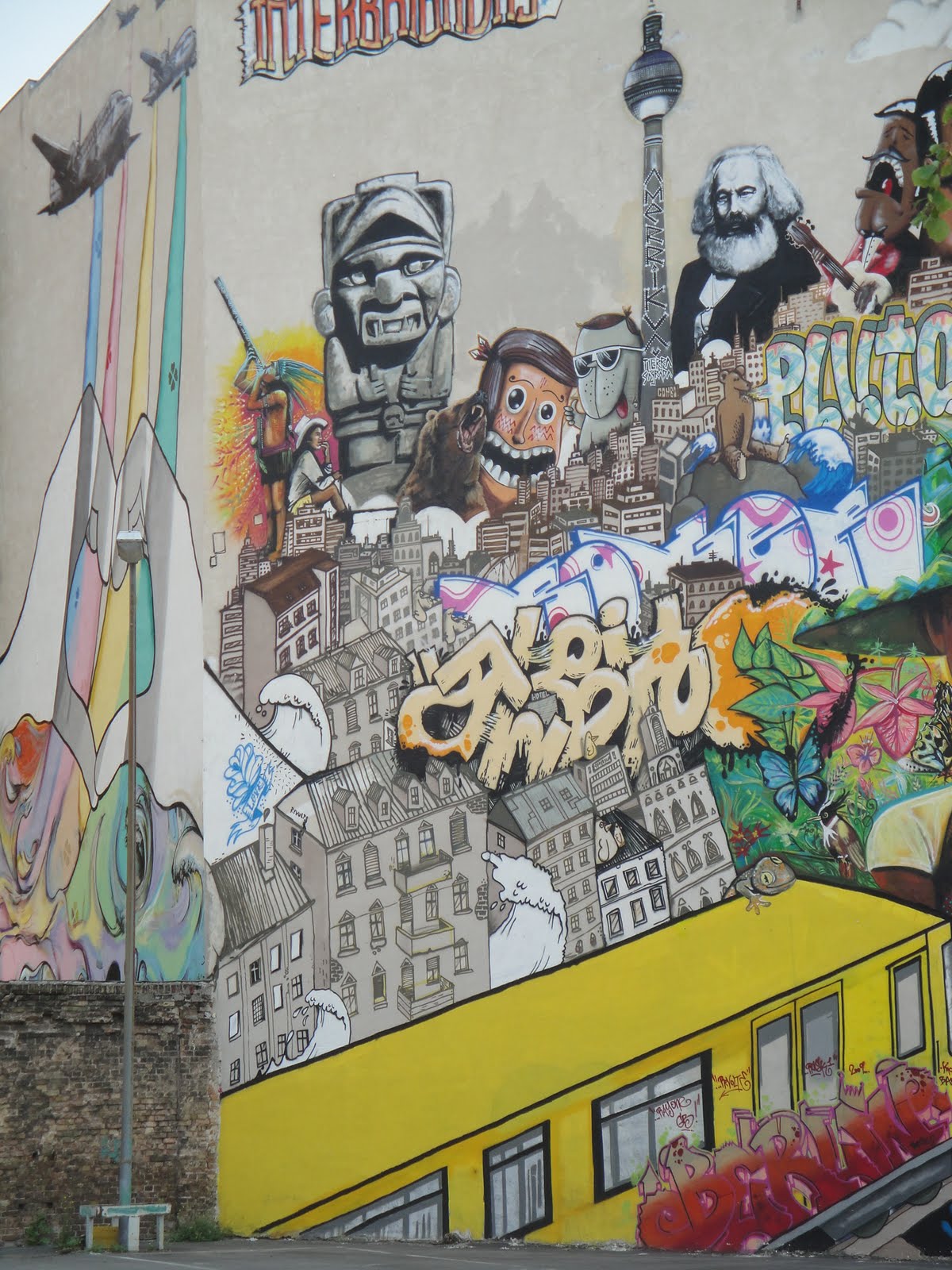
Street art refers to a form of artistic expression found in public spaces and thus openly accessible to everyone. The term can include traditional graffiti artwork, stencil graffiti, sticker art, tape art, street poster art, video projection, guerrilla art, flash mobbing and street installations. Typically, the term street art or the more specific post-graffiti is used to distinguish contemporary public-space artwork from territorial graffiti, vandalism, and corporate art.
Artists have challenged art by situating it in non-art contexts. ‘Street’ artists do not aspire to change the definition of an artwork, but rather to question the existing environment with its own language. They attempt to have their work communicate with everyday people about socially relevant themes in ways that are informed by aesthetic values without being imprisoned by them.
The motivations and objectives that drive street artists are as varied as the artists themselves. There is a strong current of activism and subversion in urban art. Street art can be a powerful platform for reaching the public, and frequent themes include ad-busting, subverting and other culture jamming, the abolishment of private property and reclaiming the streets. Other street artists simply see urban space as an untapped format for personal artwork, while others may appreciate the challenges and risks that are associated with installing illicit artwork in public places. However the universal theme in most, if not all street art, is that adapting visual artwork into a format which utilizes public space, allows artists who may otherwise feel disenfranchised, to reach a much broader audience than traditional artwork and galleries normally allow.
Street artists almost always remain anonymous or are known only to a small circle of people. Street art usually entails illicit action (for example damage to property, defacement and unauthorized placards). The artists, however, do not see anything unlawful in what they are doing.






 l
l