Alvar Aalto, designer of the Holy Ghost Community Center and the Culture House in Wolfsburg, incorporates skylights, along with light fixtures, throughout his buildings. His design of these two features are ingenious. What I love about his spaces is that he strips away traditional ornamentation. Aalto designs his spaces to convey a certain emotion provoked by light and the organic form of the spaces. He embraces light fixtures, in a way displaying them like art pieces. The intricate wood detail Aalto highlights throughout his buildings retain that craftsman quality I enjoy so much. In a way I feel that the buildings could be covered in vines with the paint chipped off the walls and it would have only made the architecture better.I love the thought of designing with aging in mind...I feel that the appearance of time and history is not only important, but beautiful and comforting. I am truly inspired by Alvar Aalto's pieces of work. It is timeless architecture!
Thursday, June 24, 2010
Wednesday, June 23, 2010
GREEN EYES
The Olympiastadion is a stadium located in Munich, Germany. Situated at the heart of the Olympiapark München in northern Munich, the stadium was built as the main venue for the 1972 Summer Olympics.
The stadium, with its open air structure and placement within the landscape, has a natural and timeless elegance. The connections of the structure create public spaces and play with the landscape. The canopy is irregular and asymmetrical but manages to be consistent, mainly because it retains an organic and natural feel. I admire this type of architecture because it appears to be light in structure, it's open to external elements, and relates to and gently settles within the landscape. The engineering behind the architecture is jaw-dropping with detailed connections at every inch and the spaces created are equally impressive.
WOLFF
The Nazi party rally grounds (in German Reichsparteitagsgelände, literally: Imperial Party Congress Grounds) form a site in the southeast of Nuremberg with a size of eleven square kilometers where the Nazi party rallies were held from 1933 until 1938.
The unfinished congress hall, designed by Albert Speer, was meant to be the largest hall ever built. It was modeled off Roman construction and spatial planning. Hitler wanted monolithic architecture that would make man feel small and powerless by himself, but connected and empowered once within a group.
THE SOUND OF SILENCE
Dachau concentration camp was the first Nazi concentration camp opened in Germany, located on the grounds of an abandoned munitions factory near the medieval town of Dachau, about 16 km (9.9 mi) northwest of Munich in the state of Bavaria, which is located in southern Germany.
Opened on 22 March 1933, it was the first regular concentration camp established by the coalition government of National Socialist Party (Nazi Party) and the German Nationalist People's Party (dissolved on 6 July 1933). Heinrich Himmler, Chief of Police of Munich, officially described the camp as "the first concentration camp for political prisoners." Dachau served as a prototype and model for the other Nazi concentration camps that followed. -Wikipedia-
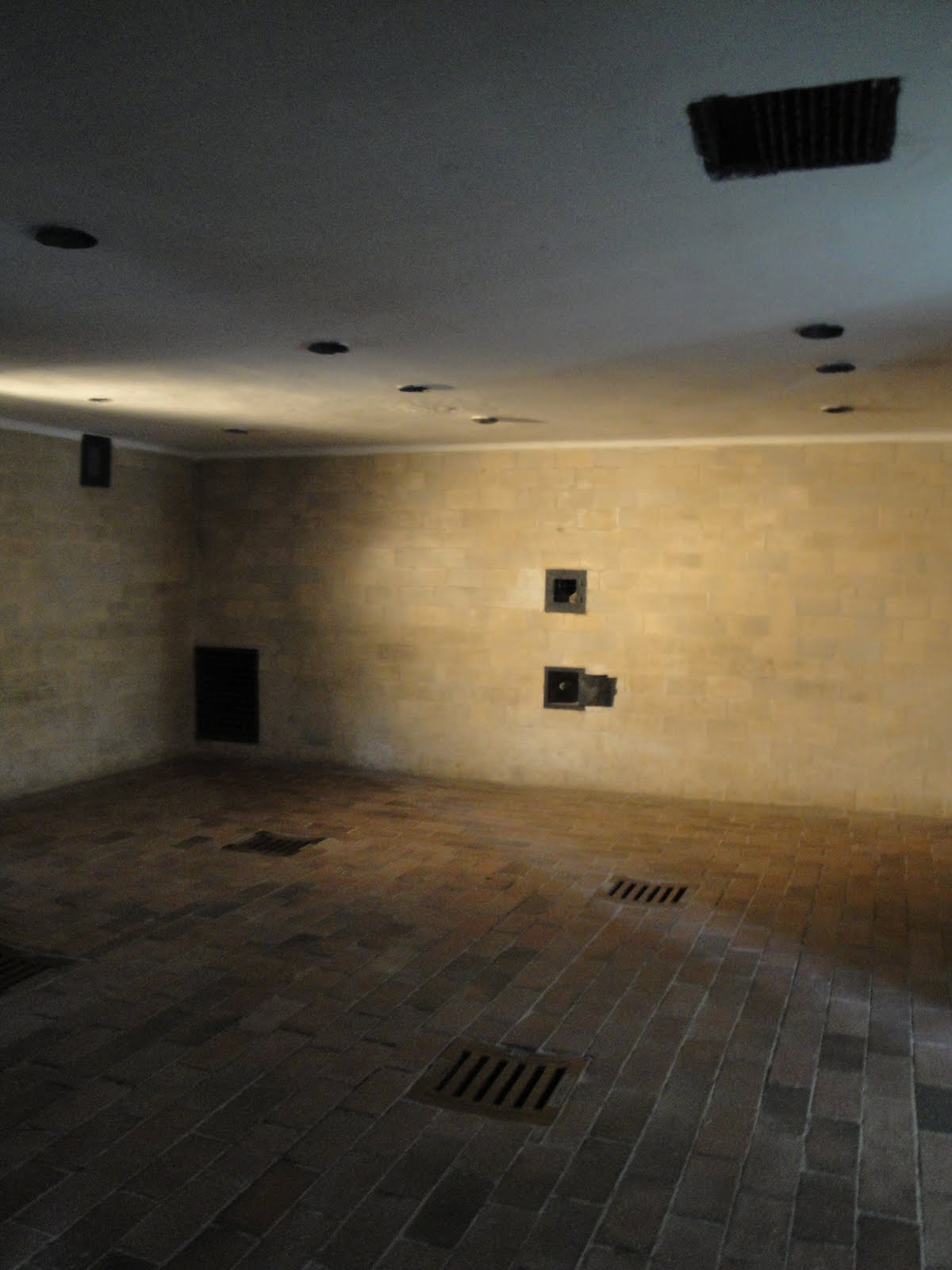
While walking through the camp, listening to the gravel with each step and shivering from the cold wind blowing across the open courtyard, I could only feel sorrow for the victims. The camp embodies a feeling of loneliness and retains the feeling of oppression. The walls spoke of heartache and all I could think about was how hard it would have been to find some glimmer of hope.
SLEEPING BEAUTY
Nuremberg is a city in Bavaria and is situated on the Pegnitz river. From 1050 to 1571, the city expanded and rose dramatically in importance due to its location on key trade routes. It is often referred to as having been the 'unofficial capital' of the Holy Roman Empire, particularly because Reichstag and courts met at Nuremberg Castle. The Diets of Nuremberg were an important part of the administrative structure of the empire. In 1219 Nuremberg became an Imperial Free City under Emperor Frederick II. Nuremberg soon became, with Augsburg, one of the two great trade centers on the route from Italy to Northern Europe.
In 1298, the Jews of the town were accused of having desecrated the host and 698 were slain in one of the many Rintfleisch Massacres. Behind the massacre in 1298 was also the desire to combine the northern and southern parts of the city, which were divided by the Pegnitz River. Jews had been settled in that flood-prone area, but as the city leaders realised, this center of town was crucial to its future development. Hence, the Jewish population had to be removed.
Even though Nuremberg has a bad history, what a beautiful city! I felt comfortable traveling through the streets. The architecture held its own vernacular and really felt like a community. The buildings where all unique in their own way, even though they were dense and confined. My favorite aspect is that the architecture is built with the landscape by following the river and contours of the land.
Subscribe to:
Posts (Atom)